
Super-resolution benchmarking#
Benchmarking#
The super-resolution module contains sample codes for benchmarking, in order to compare different models and algorithms. Here is presented a sample code for performing benchmarking, and then a few benchmarking results are collected. It was performed on an Intel i7-9700K CPU on an Ubuntu 18.04.02 OS.
Source Code of the sample#
// This file is part of OpenCV project.
// It is subject to the license terms in the LICENSE file found in the top-level directory
// of this distribution and at http://opencv.org/license.html.

#include <iostream>
#include <opencv2/opencv_modules.hpp>

#ifdef HAVE_OPENCV_QUALITY
#include <opencv2/dnn_superres.hpp>
#include <opencv2/quality.hpp>
#include <opencv2/imgproc.hpp>
#include <opencv2/highgui.hpp>

using namespace std;
using namespace cv;
using namespace dnn_superres;

static void showBenchmark(vector<Mat> images, string title, Size imageSize,
                          const vector<String> imageTitles,
                          const vector<double> psnrValues,
                          const vector<double> ssimValues)
{
    int fontFace = FONT_HERSHEY_COMPLEX_SMALL;
    int fontScale = 1;
    Scalar fontColor = Scalar(255, 255, 255);

    int len = static_cast<int>(images.size());

    int cols = 2, rows = 2;

    Mat fullImage = Mat::zeros(Size((cols * 10) + imageSize.width * cols, (rows * 10) + imageSize.height * rows),
                               images[0].type());

    stringstream ss;
    int h_ = -1;
    for (int i = 0; i < len; i++) {

        int fontStart = 15;
        int w_ = i % cols;
        if (i % cols == 0)
            h_++;

        Rect ROI((w_ * (10 + imageSize.width)), (h_ * (10 + imageSize.height)), imageSize.width, imageSize.height);
        Mat tmp;
        resize(images[i], tmp, Size(ROI.width, ROI.height));

        ss << imageTitles[i];
        putText(tmp,
                ss.str(),
                Point(5, fontStart),
                fontFace,
                fontScale,
                fontColor,
                1,
                16);

        ss.str("");
        fontStart += 20;

        ss << "PSNR: " << psnrValues[i];
        putText(tmp,
                ss.str(),
                Point(5, fontStart),
                fontFace,
                fontScale,
                fontColor,
                1,
                16);

        ss.str("");
        fontStart += 20;

        ss << "SSIM: " << ssimValues[i];
        putText(tmp,
                ss.str(),
                Point(5, fontStart),
                fontFace,
                fontScale,
                fontColor,
                1,
                16);

        ss.str("");
        fontStart += 20;

        tmp.copyTo(fullImage(ROI));
    }

    namedWindow(title, 1);
    imshow(title, fullImage);
    waitKey();
}

static Vec2d getQualityValues(Mat orig, Mat upsampled)
{
    double psnr = PSNR(upsampled, orig);
    Scalar q = quality::QualitySSIM::compute(upsampled, orig, noArray());
    double ssim = mean(Vec3d((q[0]), q[1], q[2]))[0];
    return Vec2d(psnr, ssim);
}

int main(int argc, char *argv[])
{
    // Check for valid command line arguments, print usage
    // if insufficient arguments were given.
    if (argc < 4) {
        cout << "usage:   Arg 1: image path  | Path to image" << endl;
        cout << "\t Arg 2: algorithm | edsr, espcn, fsrcnn or lapsrn" << endl;
        cout << "\t Arg 3: path to model file 2 \n";
        cout << "\t Arg 4: scale  | 2, 3, 4 or 8 \n";
        return -1;
    }

    string path = string(argv[1]);
    string algorithm = string(argv[2]);
    string model = string(argv[3]);
    int scale = atoi(argv[4]);

    Mat img = imread(path);
    if (img.empty()) {
        cerr << "Couldn't load image: " << img << "\n";
        return -2;
    }

    //Crop the image so the images will be aligned
    int width = img.cols - (img.cols % scale);
    int height = img.rows - (img.rows % scale);
    Mat cropped = img(Rect(0, 0, width, height));

    //Downscale the image for benchmarking
    Mat img_downscaled;
    resize(cropped, img_downscaled, Size(), 1.0 / scale, 1.0 / scale);

    //Make dnn super resolution instance
    DnnSuperResImpl sr;

    vector <Mat> allImages;
    Mat img_new;

    //Read and set the dnn model
    sr.readModel(model);
    sr.setModel(algorithm, scale);
    sr.upsample(img_downscaled, img_new);

    vector<double> psnrValues = vector<double>();
    vector<double> ssimValues = vector<double>();

    //DL MODEL
    Vec2f quality = getQualityValues(cropped, img_new);

    psnrValues.push_back(quality[0]);
    ssimValues.push_back(quality[1]);

    cout << sr.getAlgorithm() << ":" << endl;
    cout << "PSNR: " << quality[0] << " SSIM: " << quality[1] << endl;
    cout << "----------------------" << endl;

    //BICUBIC
    Mat bicubic;
    resize(img_downscaled, bicubic, Size(), scale, scale, INTER_CUBIC);
    quality = getQualityValues(cropped, bicubic);

    psnrValues.push_back(quality[0]);
    ssimValues.push_back(quality[1]);

    cout << "Bicubic " << endl;
    cout << "PSNR: " << quality[0] << " SSIM: " << quality[1] << endl;
    cout << "----------------------" << endl;

    //NEAREST NEIGHBOR
    Mat nearest;
    resize(img_downscaled, nearest, Size(), scale, scale, INTER_NEAREST);
    quality = getQualityValues(cropped, nearest);

    psnrValues.push_back(quality[0]);
    ssimValues.push_back(quality[1]);

    cout << "Nearest neighbor" << endl;
    cout << "PSNR: " << quality[0] << " SSIM: " << quality[1] << endl;
    cout << "----------------------" << endl;

    //LANCZOS
    Mat lanczos;
    resize(img_downscaled, lanczos, Size(), scale, scale, INTER_LANCZOS4);
    quality = getQualityValues(cropped, lanczos);

    psnrValues.push_back(quality[0]);
    ssimValues.push_back(quality[1]);

    cout << "Lanczos" << endl;
    cout << "PSNR: " << quality[0] << " SSIM: " << quality[1] << endl;
    cout << "-----------------------------------------------" << endl;

    vector <Mat> imgs{img_new, bicubic, nearest, lanczos};
    vector <String> titles{sr.getAlgorithm(), "Bicubic", "Nearest neighbor", "Lanczos"};
    showBenchmark(imgs, "Quality benchmark", Size(bicubic.cols, bicubic.rows), titles, psnrValues, ssimValues);

    waitKey(0);

    return 0;
}
#else
int main()
{
    std::cout << "This sample requires the OpenCV Quality module." << std::endl;
    return 0;
}
#endif
Explanation#
Read and downscale the image
Resize the image by the scaling factor. Before that a cropping is necessary, so the images will align.
Set the model
DnnSuperResImpl sr;
sr.readModel(path);
sr.setModel(algorithm, scale);
sr.upsample(img_downscaled, img_new);
Instantiate a dnn super-resolution object. Read and set the algorithm and scaling factor.
Perform benchmarking
Calculate PSNR and SSIM. Use OpenCVs PSNR (core opencv) and SSIM (contrib) functions to compare the images. Repeat it with other upscaling algorithms, such as other DL models or interpolation methods (eg. bicubic, nearest neighbor).
Benchmarking results#
General100 dataset#
2x scaling factor#
Avg inference time in sec (CPU) |
Avg PSNR |
Avg SSIM |
|
|---|---|---|---|
ESPCN |
0.008795 |
32.7059 |
0.9276 |
EDSR |
5.923450 |
34.1300 |
0.9447 |
FSRCNN |
0.021741 |
32.8886 |
0.9301 |
LapSRN |
0.114812 |
32.2681 |
0.9248 |
Bicubic |
0.000208 |
32.1638 |
0.9305 |
Nearest neighbor |
0.000114 |
29.1665 |
0.9049 |
Lanczos |
0.001094 |
32.4687 |
0.9327 |
3x scaling factor#
Avg inference time in sec (CPU) |
Avg PSNR |
Avg SSIM |
|
|---|---|---|---|
ESPCN |
0.005495 |
28.4229 |
0.8474 |
EDSR |
2.455510 |
29.9828 |
0.8801 |
FSRCNN |
0.008807 |
28.3068 |
0.8429 |
LapSRN |
0.282575 |
26.7330 |
0.8862 |
Bicubic |
0.000311 |
26.0635 |
0.8754 |
Nearest neighbor |
0.000148 |
23.5628 |
0.8174 |
Lanczos |
0.001012 |
25.9115 |
0.8706 |
4x scaling factor#
Avg inference time in sec (CPU) |
Avg PSNR |
Avg SSIM |
|
|---|---|---|---|
ESPCN |
0.004311 |
26.6870 |
0.7891 |
EDSR |
1.607570 |
28.1552 |
0.8317 |
FSRCNN |
0.005302 |
26.6088 |
0.7863 |
LapSRN |
0.121229 |
26.7383 |
0.7896 |
Bicubic |
0.000311 |
26.0635 |
0.8754 |
Nearest neighbor |
0.000148 |
23.5628 |
0.8174 |
Lanczos |
0.001012 |
25.9115 |
0.8706 |
Images#
2x scaling factor#
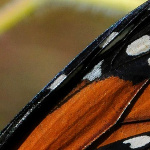
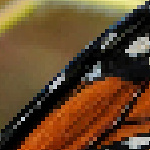
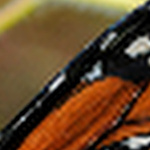
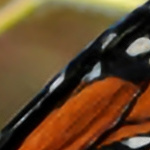
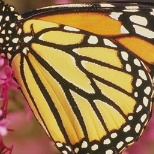
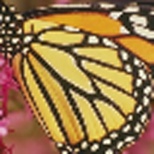
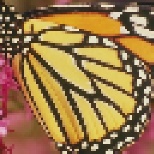
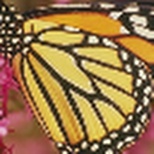
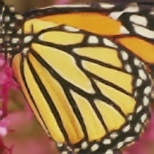
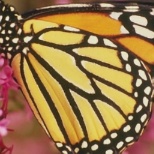
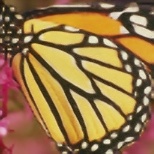
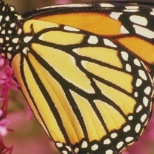
Set5: butterfly.png |
size: 256x256 |
||
|---|---|---|---|
|
|
|
|
PSRN / SSIM / Speed (CPU) |
26.6645 / 0.9048 / 0.000201 |
23.6854 / 0.8698 / 0.000075 |
26.9476 / 0.9075 / 0.001039 |
|
|
|
|
29.0341 / 0.9354 / 0.004157 |
29.0077 / 0.9345 / 0.006325 |
27.8212 / 0.9230 / 0.037937 |
30.0347 / 0.9453 / 2.077280 |
3x scaling factor#
Urban100: img_001.png |
size: 1024x644 |
||
|---|---|---|---|
|
|
|
|
PSRN / SSIM / Speed (CPU) |
27.0474 / 0.8484 / 0.000391 |
26.0842 / 0.8353 / 0.000236 |
27.0704 / 0.8483 / 0.002234 |
|
|
LapSRN is not trained for 3x |
|
28.0118 / 0.8588 / 0.030748 |
28.0184 / 0.8597 / 0.094173 |
30.5671 / 0.9019 / 9.517580 |
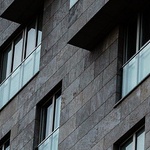
4x scaling factor#
Set14: comic.png |
size: 250x361 |
||
|---|---|---|---|
|
|
|
|
PSRN / SSIM / Speed (CPU) |
19.6766 / 0.6413 / 0.000262 |
18.5106 / 0.5879 / 0.000085 |
19.4948 / 0.6317 / 0.001098 |
|
|
|
|
20.0417 / 0.6302 / 0.001894 |
20.0885 / 0.6384 / 0.002103 |
20.0676 / 0.6339 / 0.061640 |
20.5233 / 0.6901 / 0.665876 |








8x scaling factor#
Div2K: 0006.png |
size: 1356x2040 |
|
|---|---|---|
|
|
|
PSRN / SSIM / Speed (CPU) |
26.3139 / 0.8033 / 0.001107 |
23.8291 / 0.7340 / 0.000611 |
|
|
|
26.1565 / 0.7962 / 0.004782 |
26.7046 / 0.7987 / 2.274290 |